
Bringing focus to developments & opportunities in Africa's education sector.

Tuesday, July 28, 2026
Kogi varsity gets research centre, digital library
Tags:
Education, Research Methods
Nigeria
Country:
The Executive Secretary of the Financial Reporting Council of Nigeria, Dr Rabiu Olowo, has initiated the construction of a Research Centre of Excellence and Digital Library at his alma mater, Prince Abubakar Audu University, Anyigba, Kogi State.
Speaking during the groundbreaking ceremony at the university, the project’s coordinator, Dr Mohammed Umar, said the facility would be developed to global standards to strengthen research, teaching and learning.
Umar said the centre would house a digital library with extensive academic resources that would be accessible to accounting students across universities.


punchng.com
Tuesday, July 28, 2026
Ruto Vows Every University Student Will Get Full Govt Funding
Tags:
Education, Management & Finance
Kenya
Country:
President William Ruto has reaffirmed his pledge that every student joining university will receive full government funding, saying education remains the country's biggest investment despite growing concerns over where the money will come from.
President Ruto said the government is refining its university funding model to ensure every learner has access to higher education regardless of their financial background.
"We have made very good progress with our new student-centered funding model, and I want to tell our Vice-Chancellors we will be engaging them as we now progress to even a better funding model that will make sure that every student has full funding for their education," Ruto said.
allafrica.com
Tuesday, July 28, 2026
Transforming second cycle education, eliminating double-track: Govt to undertake 210 major infrastructure interventions
Tags:
Education, Management & Finance
Ghana
Country:
The government will undertake 210 major infrastructure interventions to transform secondary education across the country under the $300 million World Bank financing.
They include the construction of 10 new secondary schools, rehabilitation of 150 existing schools, upgrading of 30 Category C schools to Category B, upgrading of 20 Category B schools to Category A and the procurement of furniture for the beneficiary institutions.
Presenting the 2026 Mid-Year Fiscal Policy Review in Parliament last Thursday, the Minister of Finance, Dr Cassiel Ato Forson, said the 10 new secondary schools would be strategically distributed to improve access in underserved areas.
graphic.com.gh
Tuesday, July 28, 2026
Kindergarten pupils to learn Chinese language in Ghanaian schools in new curriculum being introduced by Ministry of Education
Tags:
Education, Curriculum Design & Delivery
Ghana
Country:
Thirteen subject areas aimed at improving foundational learning and equipping pupils with 21st-century skills, values and ethics are to be the focus in a revised curriculum prepared by the National Council for Curriculum and Assessment (NaCCA) aimed at introducing or strengthening basic level education.
The newly revised curriculum for kindergarten and primary education include Ghanaian Language, English Language, Chinese, Arabic, French, Religious and Moral Education, Mathematics, Physical Education and Health, Creative Arts, Citizenship Education, Computing and Science (Agriculture), all for primary education alone.
The revised curriculum, covering Kindergarten to Primary Six, was submitted to the Minister of Education, Haruna Iddrisu, in Accra on Wednesday (July 22, 2026) by the Director-General of NaCCA, Professor Samuel Ofori Bekoe, who led the committee on the curriculum revision.
graphic.com.gh
Monday, July 27, 2026
Malawi: Government to Hire 1,100 Secondary Teachers As Rising Enrolment Puts Pressure On Classrooms
Tags:
Education, Teachers
Malawi
Country:
Government says it will recruit at least 1,100 secondary school teachers, and is also preparing to hire additional primary school teachers as enrolment surges under Malawi's free education policy.
Speaking on the sidelines of Parliament, Education Minister Bright Msaka SC said the new intake will support the expansion of secondary education while easing pressure in early-grade classrooms, where numbers have risen sharply since school-related charges were removed.
Msaka said the ministry is placing particular emphasis on foundational learning, increasing teacher numbers in Standards 1-4 to strengthen literacy and numeracy at the earliest stages.
allafrica.com
Wednesday, July 22, 2026
Ruto Announces Plan for Free University Education for All Kenyan Students
Tags:
Education, Management & Finance
Kenya
Country:
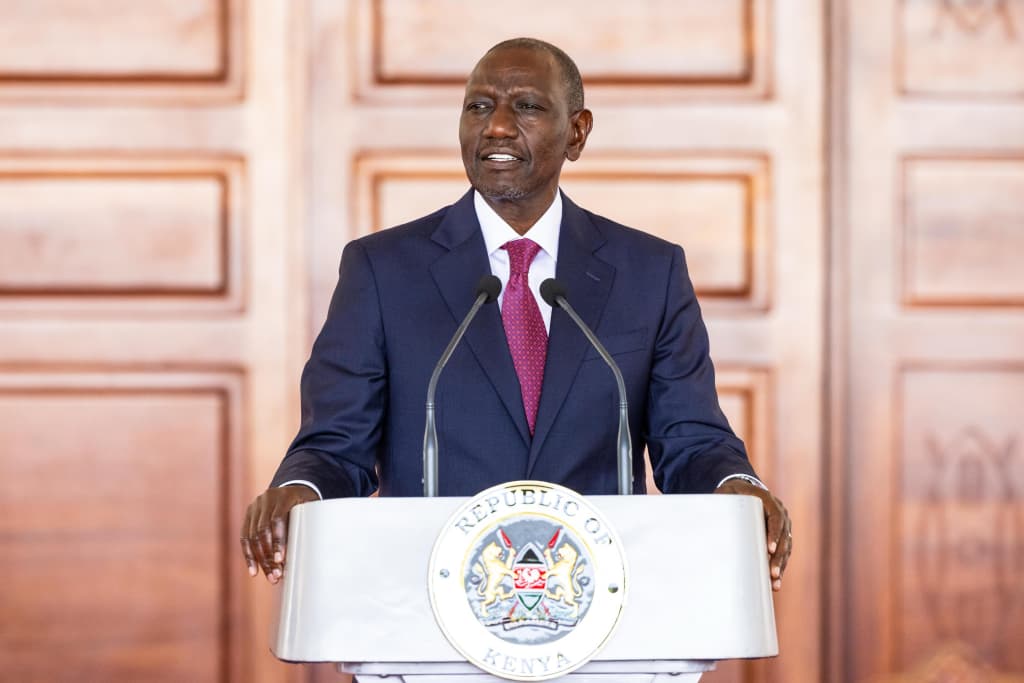
Kenyan President William Ruto has announced plans to fully fund university and college education for every student who qualifies for admission, saying no child should miss out on higher education because of their family's financial situation.
Speaking on Tuesday at State House in Nairobi, Ruto said the government had completed work on a new higher education funding model and submitted the necessary amendments to Parliament to pave the way for universal funding beginning in September this year.
The proposal marks a major policy shift after years of complaints from universities over inadequate government funding and concerns from students who struggled to raise tuition despite qualifying for admission.
allafrica.com
Wednesday, July 22, 2026
16,000 more teachers to be recruited in two phases starting November 2026
Tags:
Education, Teachers
Ghana
Country:
The Minister of Education, Haruna Iddrisu has said approval has been given for the recruitment of 16,000 teachers more teachers in two phases, starting in November 2026.Language Resources
This is coming after a recent recruitment of 7,000 teachers.
He said the move is aimed at helping to reduce teacher shortages, especially in underserved communities across the country. The first recruitment window would open in November this year, with successful applicants expected to begin work in January and February 2027.
A second batch of 8,000 teachers would be recruited afterwards.
graphic.com.gh

Wednesday, July 22, 2026
UNESCO, TVET Service deepen partnership for career guidance
Tags:
Education, Curriculum Design & Delivery
Ghana
Country:
Career guidance and counselling have been identified as critical interventions needed to improve learner enrolment, retention, completion and transition into employment.
This is particularly in agriculture and other productive sectors as the country intensifies efforts to make technical vocational education and training (TVET) more inclusive and responsive to labour market demands.
At a workshop on “Enhancing Gender-Responsive and Inclusive Career Guidance: Empowering Pathways into Agriculture TVET” under the Better Education for Africa’s Rise (BEAR III) Project, stakeholders stressed that effective guidance systems would equip learners with the information and support required to make informed career choices, while addressing barriers faced by girls, persons with disabilities and other marginalised groups.
graphic.com.gh

Tuesday, July 21, 2026
Kavango West records inclusive education milestones
Tags:
Education, Curriculum Design & Delivery, Policy & Advocacy
Namibia
Country:
Kavango West has made progress in implementing inclusive education but remains one of the country’s least served regions for learners with special educational needs due to limited specialised educational services and resources.
Education director Pontianus Musore said this on Thursday while responding to questions from the Ministry of Information and Communication Technology (MICT).
The region currently depends on one inclusive school and one resource unit to serve 17 learners with intellectual impairments and 164 learners with learning difficulties. “Statistically, Kavango West remains one of the least-served regions for learners with special educational needs, although it has made progress in implementing inclusive education, compared to other regions.
neweralive.na
Thursday, July 16, 2026
Chikunga Calls for Bold Action to Make Quality Education Accessible to Learners With Disabilities
Tags:
Education, Policy & Advocacy
South Africa
Country:
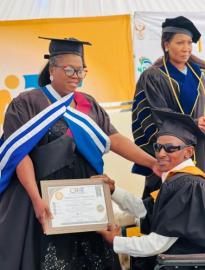
Minister in the Presidency for Women, Youth and Persons with Disabilities Sindisiwe Chikunga has called for urgent action to remove the barriers that continue to prevent learners with disabilities from accessing quality education and meaningful employment opportunities.
Delivering the keynote address at the Recreation Aid Foundation (RAF) Graduation Ceremony in Soshanguve, north of Pretoria, on Wednesday, Chikunga said South Africa must build an education system that embraces inclusion and ensures every learner has an equal opportunity to succeed.
Congratulating the Class of 2026, the Minister commended the foundation for empowering academically disadvantaged learners and young people with special educational needs through academic and vocational training.
allafrica.com
Wednesday, July 15, 2026
Ghana partners Malta to strengthen ethics education
Tags:
Education, Curriculum Design & Delivery
Ghana
Country:
Ghana has partnered the Republic of Malta to strengthen ethics education and promote integrity, citizenship and service among young people through the launch of the Project ETHICS, a values-based learning initiative designed to support schools, teachers and communities.
The project, titled Empowering Tomorrow’s Heroes with Integrity, Citizenship & Service (ETHICS), seeks to develop ethical awareness among learners through storytelling, digital learning tools, teacher training and educational resources.
It aims to help young people build critical thinking skills, understand civic responsibilities and make responsible choices in their communities.
graphic.com.gh
Tuesday, July 14, 2026
AUC Calls for Fundamental Overhaul of Africa's Education System Through Digital Transformation
Tags:
Education, Technology & Media
Africa
Country:
The African Union Commission (AUC) has called on African countries to fundamentally transform their education systems through digital innovation.
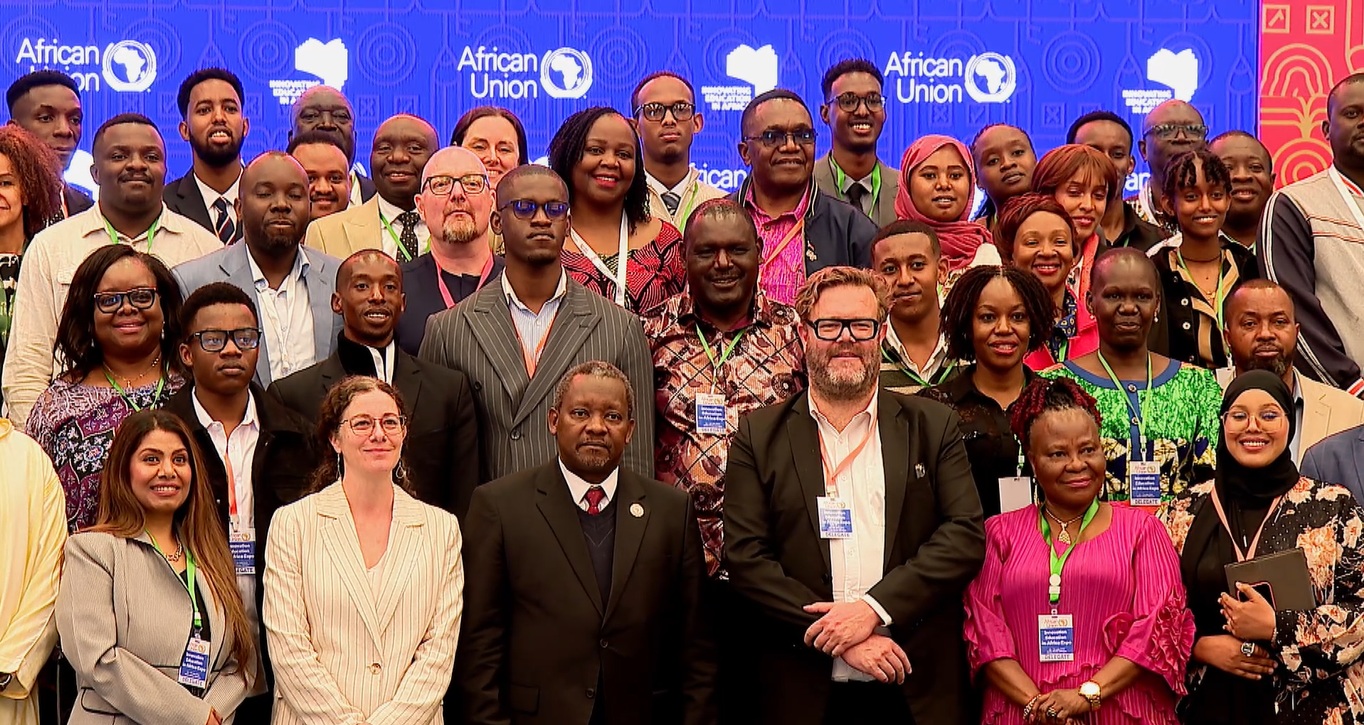
Speaking at the opening of the Innovating Education in Africa Expo 2026 in Addis Ababa, AU Commissioner for Education, Science, Technology and Innovation (ESTI), Prof. Gaspard Banyankimbona, stressed that technology must reshape the entire learning ecosystem rather than simply introduce computers into classrooms.
A two-day Expo, held under the theme "Accelerating the Digital Transformation of Education: Scaling Innovative Solutions for the AU Decade of Education and Skills 2025-2035," brought together ministers, educators, researchers, development partners, investors, innovators and youth representatives from more than 20 African and international countries.
allafrica.com

About YoungEd Media
YoungEd Media is an online news aggregation channel that aims to bring focus to developments and opportunities within Africa's education sector.
YoungEd Media an initiative of YoungEd Africa.